Sand Dune Fences: How to Build a Stronger Dune System

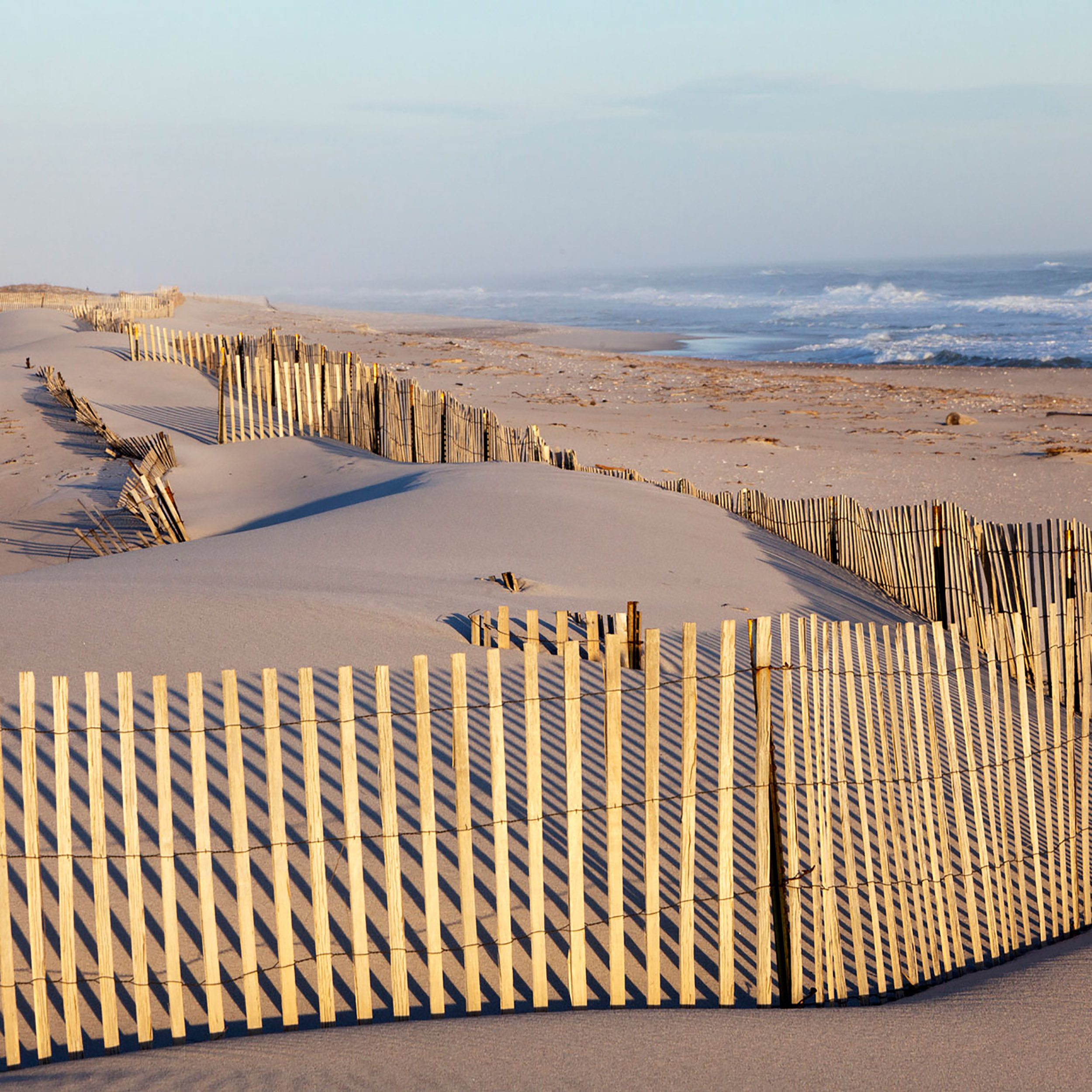
Sand dunes are the coast's first line of defense; protecting beaches from erosion, sheltering rare and endangered plants and animals, and helping protect against coastal erosion and flooding. But dunes threatened by human activity continue to dwindle. When you go to the beach, most of the time you'll come across a long stretch of wood fence that isn't really designed for security like a chain link fence. This is a sand dune fence, one of the simplest and least expensive forms of beach engineering; many National Seashores, including Cape Hatteras and Cape Cod, use it. Why? Because using a well-placed fence doesn't just protect a dune; it builds a new one.
Why Are Sand Dunes Important?
There's a number of reasons why sand dunes are so important other than they are supposed to be there naturally, something we should be trying to protect. They provide beaches from eroding away from simply blowing away, protect native vegetation such as sea oats, panic grass, and bitter panicum, and are a significant factor in coastal protection from floods and tsunamis. These dunes are used by everybody, but humans are unfortunately responsible for their shrinkage and overall diminishing returns.
- Dunes protect beaches from erosion and provide habitat for many rare and endangered plant and animal species
- Dune systems also protect against coastal erosion and flooding
- Dunes worldwide are threatened by human activity and continue to dwindle, harming both endangered species and beach life
- For oceanfront property, coastal erosion solutions exist on a spectrum from hard armor to soft solutions
What Does a Sand Dune Fence Actually Do?
While it is filled with gaps, sand dune fencing reduces local wind speed and traps windblown sand. As wind travels through the fence, it slows, building sand up where you want it and keeping sand out of areas you don't. You can install fencing along the base of an eroded dune and perpendicular to it to trap windblown sand and help rebuild the dune. Effectiveness depends largely on local wind dynamics and corresponding placement.
How to Install a Sand Dune Fence (Quick Guide)

- Check local rules first: installation standards, post type, and post spacing vary by municipality, engineer, and project; always refer to local standards and beach preservation restrictions
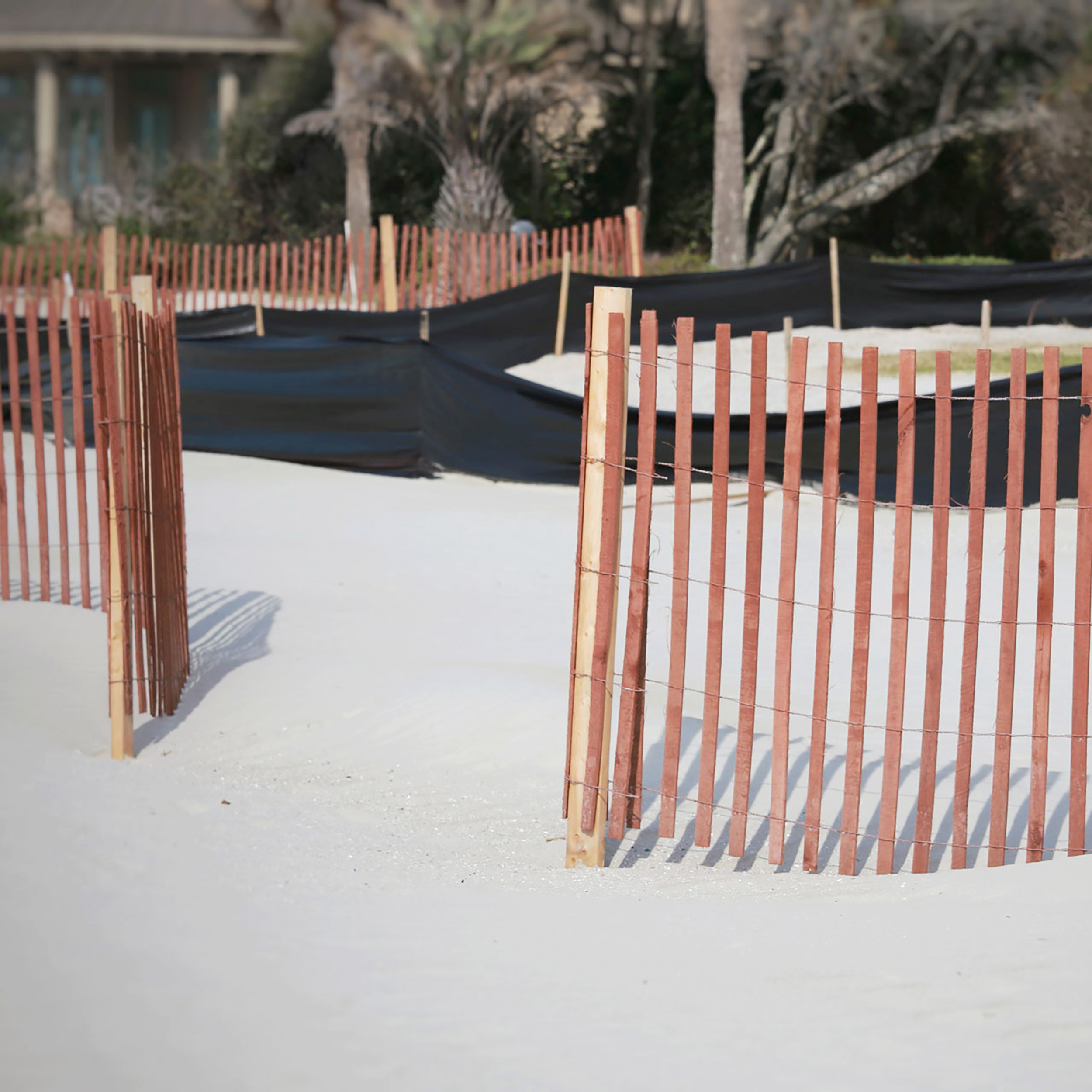
- Match the layout to your goal: parallel for a ridge, zig-zag for width and vegetation, perpendicular against an eroded face
- Set posts: steel fence posts, 2" x 4"s, or U-channel posts are typical; coastal guidance calls for posts spaced at least 4 feet apart and buried a minimum of 4 feet
- Attach and tension by hand: store install guide method (1" x 2" slat sandwich or T-post clips, no mechanical tensioners)
- Plan for burial: an effective fence becomes buried as it traps sand; when it's about two-thirds buried, add a second row on the seaward side to keep the dune growing
Sand Dune Fence Q&A
Does a buried fence mean it failed?
No, effective sand fences become buried as sand is trapped; that burial is the fence doing its job. The second-row step above keeps the system growing.
Can dune fencing harm the beach?
Older, less refined fencing may create unwanted debris following erosional events; dune formation alters the highly dynamic zone between beach and dunes, an important habitat for nesting shorebirds and sea turtles; and fencing may rework local wind patterns, causing unplanned sand buildup or removal in adjacent sites.
Should fencing be my only dune strategy?
No, while it should be considered as a primary and highly recommended strategy, it's best to include redundancies when protecting the environment to reduce risk and points of failure. Sand fencing should be considered one of multiple potential tools, and decisions should be site-specific. Pair fencing with dune nourishment and vegetation planting as part of a fuller system.
Resources Hub